Car keys · Hamilton
Vehicle Lock Repair
After a cold night the driver's door key barely goes in, and when it finally seats it stops halfway and will not turn any further. Meltwater from the day before ran into the keyway and the overnight drop in temperature sealed it solid.
Vehicle Lock Repair
In plain words
The visit follows a steady order regardless of which lock is affected. On the phone, the vehicle's details and the symptom are noted; on arrival, the customer's connection to the vehicle is confirmed against the registration; then the affected panel is opened, the cylinder, linkage and actuator are tested in turn, and the specific failed part is identified. Repair or replacement follows, new keys or a fob are cut or matched as needed, and every point is cycled by whichever controls it actually has, key, switch or remote, before the visit closes.
How the visit goesYour key turns smoothly in the driver's door, the same as it always has, but the button underneath stays down and the latch never releases. The passenger side opens without any trouble, so the key itself is clearly not the source of the trouble.
Hamilton
How the visit goes
Opening the panel to see the linkage and actuator
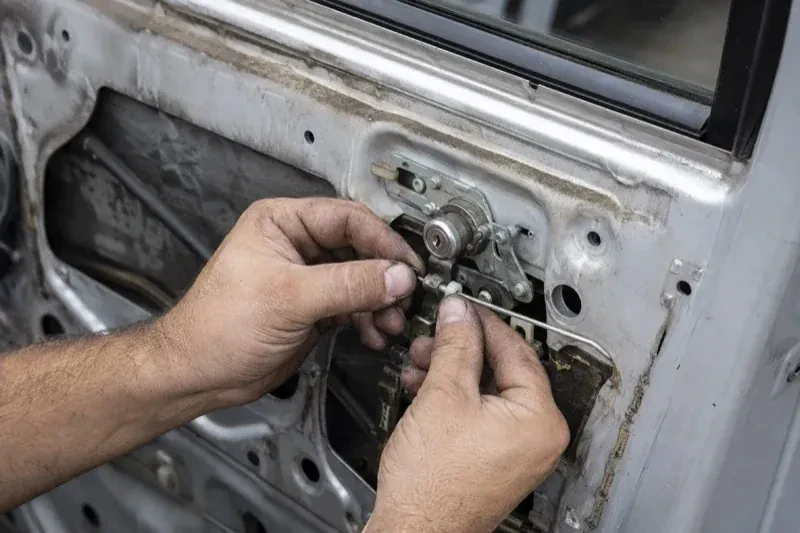
Reaching the actual mechanism means removing the interior trim panel behind the affected lock. With it off, the locksmith can often see whether the linkage rod is still clipped to the back of the cylinder, whether the power actuator moves when the switch or remote is used, and whether corrosion or a cracked wiring boot at the hinge has reached the connector, though on some doors a carrier plate, water shield or window guide still has to come away first to reach these parts. This is where a spinning key or an unresponsive remote usually gets its explanation.
Replacing a power lock actuator
A door that answers the key but ignores the remote is checked before any part is named: partial manual-lock position, door fit, cable routing, connectors and harness continuity can restore it without a new part, and only once those are clear does a worn power lock actuator, the small motor that pulls the linkage, become the answer. The locksmith removes the failed unit, connects the replacement to the existing wiring and linkage, and tests it through several full cycles before the panel is closed up, confirming both the switch inside the car and the remote outside it move the lock the same way.
Every point cycled and confirmed
Before the visit ends, the locksmith runs the repaired lock through every control it actually has at that location, a key from outside, the interior switch or handle, or the remote, checking that each path locks and releases cleanly. Central locking is cycled a few times with every door watched at once, so a fault that only lagged occasionally is caught rather than assumed fixed after a single try. You see the working lock for yourself before the locksmith packs up.
Vehicle Lock Repair
In the van
- Key fob shells and batteries
- Automotive pick and tension tools
- Power door lock actuator
- Transponder chips
- Linkage rods and clips
What affects the quote
Same fees day, night or weekend
1Age and make of the vehicle
Some vehicles use widely available hardware, while others need parts sourced specifically for that make and model. Availability of the matching cylinder, actuator or key blank affects the timeline and the quote.
2Central locking versus a single door
A fault confined to one lock is more contained than one that involves the vehicle's central locking module or wiring shared across several doors, which takes longer to trace and quotes accordingly.
3Whether the vehicle is easy to work around
A vehicle parked in an open, level spot is simpler to work on than one that is not easily reached or is parked somewhere awkward, which affects the time the visit takes.
Vehicle Lock Repair: questions
How does a locksmith reach the actuator or linkage inside my door?
The interior trim panel is removed using tools shaped to release its retaining clips without marking the panel. On many doors that exposes the cylinder, the linkage rod and the power actuator for individual testing and repair, though some doors keep a carrier plate, water shield or window guide in the way, or use an integrated latch and actuator assembly, and are worked on accordingly.
Is it normal for only the trunk or hatch lock to fail while the doors are fine?
Yes, this happens fairly often because a trunk or hatch lock gets used far less than the door locks and can seize from disuse, dust or corrosion, or spin freely if its own linkage has come loose over time.
How many keys or fobs will I leave with if mine gets replaced?
That depends on what you ask for. Most owners keep the original plus one spare, cut or paired at the same visit and tested in every lock on the vehicle so the household has a working backup from the start.
Car Keys
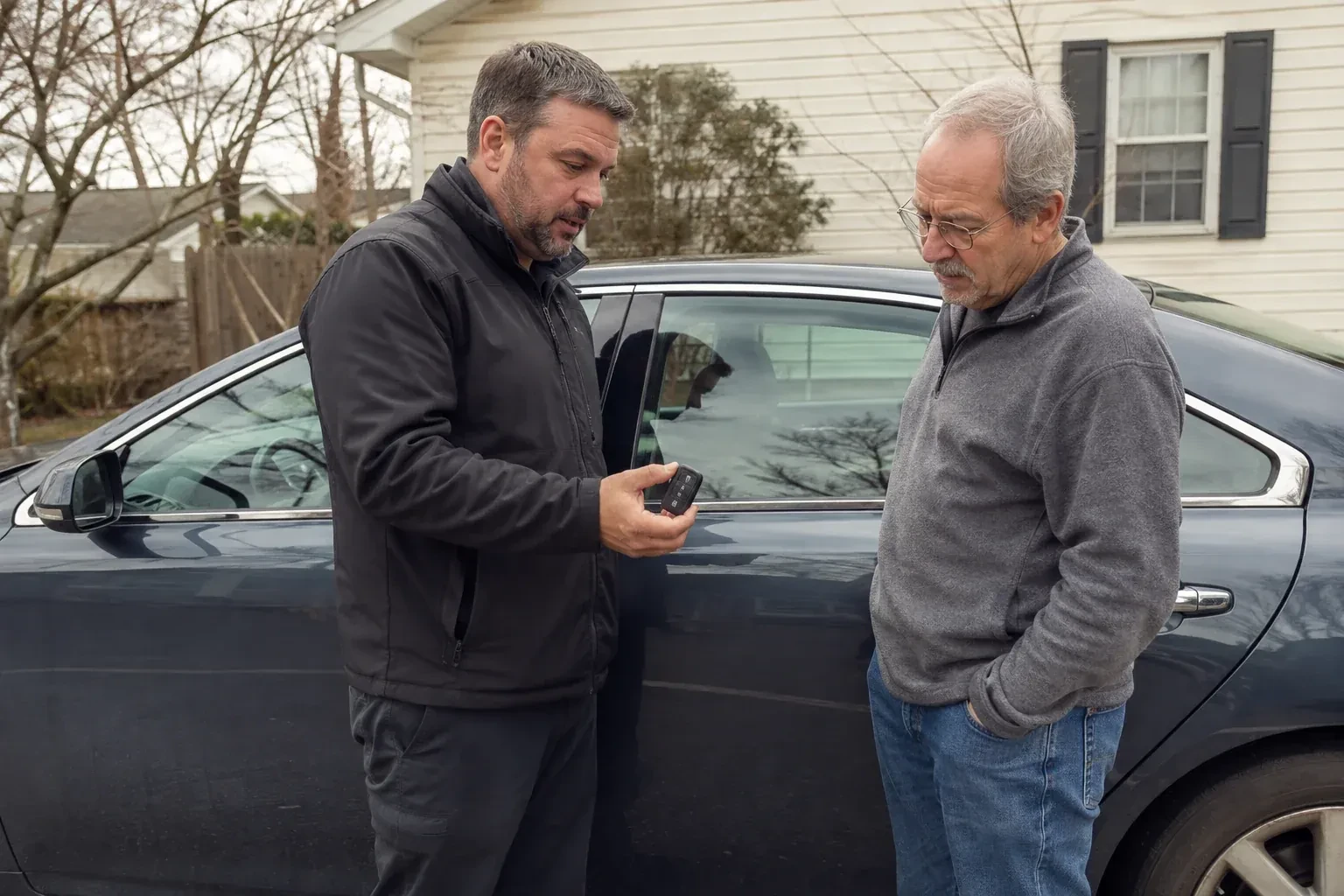
- Car Key ReplacementThe key snapped at the head while you were turning it in a stiff, frosty door lock.
- Spare Car Key DuplicationThe blade on the everyday key has gone shiny and thin along one edge, and lately it needs a wiggle…
- Key Fob ProgrammingEvery fob for the car disappeared at once inside a bag that was never recovered, and the vehicle…
Vehicle Lock Repair near you
Think of this as the workshop list for Hamilton. Emergency lockouts and key extraction. Rekeying after a move or a staff change. Lock replacement and deadbolt installation. High-security cylinders and reinforced strikes. Commercial hardware, closers and master keys. Safe opening and service. Key cutting for house and car.